The Future of Teaching: AI, Human Skills and Digital Learning
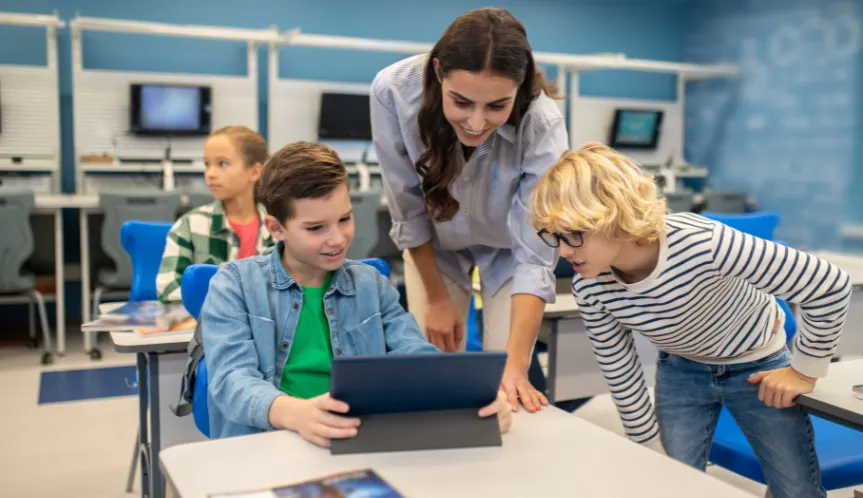
September 1, 2026Education is changing rapidly. Classrooms are no longer limited to textbooks, blackboards, and traditional lectures. With artificial intelligence (AI), digital platforms, interactive content, and online assessment tools becoming part of everyday education, teachers and students are experiencing a new way of learning.
However, technology is not replacing the teacher. Instead, it is helping educators spend more time on what technology cannot easily provide: communication, creativity, empathy, critical thinking, and meaningful human interaction.
The future of teaching will be shaped by the right combination of AI, human skills, and digital learning.
How AI Is Changing Teaching
Artificial intelligence is becoming an important part of modern education. Teachers can use AI-based tools to create learning materials, generate practice questions, summarize information, and provide personalized learning support.
AI can also help identify learning patterns. For example, digital platforms can analyze student performance and highlight areas where learners may need additional practice.
Personalized Learning With AI
Every student learns differently. Some students may understand a concept quickly, while others may need additional examples and practice.
AI can support personalized learning by analyzing student responses and suggesting suitable learning materials. Instead of giving every learner the same experience, technology can help create a more flexible learning journey.
AI as a Teaching Assistant
AI can support teachers with repetitive tasks such as creating question sets, organizing learning resources, preparing basic reports, and analyzing assessment results.
This does not mean that teachers become less important. Instead, reducing repetitive administrative work can give educators more time to focus on students and classroom interaction.
Human Skills Will Become More Important
As technology becomes more capable, human skills become even more valuable. Teaching is not only about delivering information. It is also about understanding students, encouraging curiosity, building confidence, and creating meaningful connections.
Critical Thinking and Problem-Solving
Students need to learn how to evaluate information rather than simply accept the first answer they find online.
Teachers can encourage students to ask questions, compare sources, solve real-world problems, and explain their reasoning. These activities help develop critical thinking and problem-solving skills that remain important even as AI tools become more common.
Creativity and Communication
Technology alone makes it difficult to develop creativity, teamwork, communication, leadership, and empathy.
Future classrooms are likely to combine digital tools with discussions, presentations, group activities, projects, and practical learning. This approach allows students to use technology while developing the human skills needed in higher education and professional environments.
Digital Learning Is Reshaping the Classroom
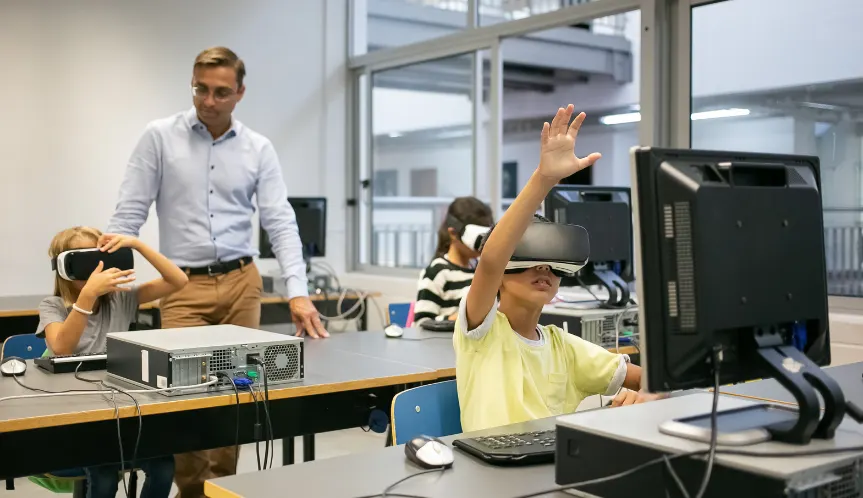
Digital learning has made education more flexible and accessible. Students can access courses, videos, interactive activities, digital books, quizzes, and learning resources from computers, tablets, and smartphones.
Teachers can also combine classroom teaching with online resources to create blended learning experiences.
Interactive Learning and Student Engagement
Traditional lectures can sometimes make students passive learners. Digital learning platforms can make education more interactive through quizzes, simulations, videos, discussions, and instant feedback.
For example, a teacher can conduct a short digital quiz after completing a lesson. Students receive an opportunity to test their understanding, while teachers can identify concepts that may need further explanation.
The Role of Quiz Management Software
Quiz management software is becoming increasingly useful for modern teaching and learning. It can help educators create quizzes, organize questions, manage participants, conduct assessments, and review results.
Instead of manually checking every response, digital quiz platforms can automate parts of the assessment process and provide performance insights.
For schools, colleges, training organizations, and businesses, this can make regular testing easier to manage.
Assessment Is Moving Beyond Traditional Exams
Assessment is an important part of education because it helps teachers understand whether students are achieving learning objectives.
Traditional examinations still have their place, but digital assessment provides additional possibilities.
Continuous Assessment
Instead of relying only on one final examination, educators can use regular quizzes, assignments, activities, and tests to monitor progress throughout a course.
Continuous assessment can help identify learning gaps earlier. Students can receive feedback while there is still time to improve.
Data-Driven Assessment
Digital assessment tools can collect useful performance data. Teachers can review scores, identify common mistakes, and understand which topics students are struggling with.
This information can support better teaching decisions. Rather than relying only on assumptions, educators can use assessment results as one source of evidence when planning future lessons.
The Teacher of the Future
The teacher of the future will not simply be a person who delivers information. Teachers will increasingly act as mentors, facilitators, problem-solvers, and learning guides.
Technology can provide information quickly, but teachers help students understand how to use that information responsibly.
Combining Technology With Human Connection
The most effective future learning environments are likely to combine technology with human interaction.
AI can support personalization. Digital platforms can provide flexibility. Quiz management software can simplify testing and assessment. However, teachers remain essential for motivation, emotional support, discussion, creativity, and deeper learning.
The goal should not be to choose between technology and human teaching. It should be to use technology where it adds value while protecting the human side of education.
What the Future of Education May Look Like
Education will continue to evolve as new technologies become available. AI-powered learning assistants, interactive digital content, online assessments, learning analytics, and personalized learning experiences may become increasingly common.
Students will also need to develop the ability to learn continuously. Instead of ending with graduation, education can support lifelong learning and professional development through digital learning.
For educational institutions, the challenge will be to adopt technology thoughtfully. Technology should solve real educational problems rather than simply being introduced because it is new.
Conclusion
The future of teaching will balance AI, digital learning, and human skills. Technology can automate repetitive tasks, personalize learning, support quizzes, and improve assessment processes. At the same time, teachers will continue to provide the human connection, creativity, critical thinking, and guidance that students need.
With the right approach, tools such as quiz management software can make learning and assessment more organized, interactive, and data-driven.
The future classroom is therefore not about replacing teachers with technology. It is about giving teachers better tools to help students learn, think, communicate, and prepare for a changing world.